Task B. The Learning Process
– The Laws of Learning
The Federal Aviation Administration’s (FAA) Flight Instructor, Airman Certification Standards (ACS) treats the Laws of Learning as required knowledge for any initial flight instructor applicant.
The FAA expects CFIs to have a solid understanding of how learning occurs, as the quality of instruction directly impacts training results and safety. Additionally, the FAA associates the learning process with risk management factors such as insufficient or incomplete instruction, low learner motivation, and the identification and correction of learner errors.
REEPIR is an acronym for the FAA’s six Laws of Learning: readiness, primacy, exercise, effect, intensity, and recency.
“Fresh Start”
Written By R. Maclyn Stringer
As a senior and experienced flight instructor, I was asked to take on a student who had been struggling with his flight lessons for some time. Alex’s commitment to flight training was inconsistent, averaging three lessons per month, and he had gone through three instructors over the past two years. Like most instructors, two of them left for airline jobs, leaving little continuity in Alex’s instruction. His latest instructor, Austin, realized he was not a good fit for Alex. Austin pulled me aside, explained Alex’s situation, and thought I would be able to work well with him. This was mature thinking on Austin’s part, given that he was a relatively young flight instructor. He understood that not all personalities work well together in a training environment, especially when teaching an older student.
I met Alex and learned that he was fifty years old and a successful mechanical engineer. Watching him pre-flight the aircraft, I noticed that he was methodical and precise. He talked me through what he was doing as he went through his flow, reciting the checklist without hesitation, ensuring every detail was complete. For all intents and purposes, I believed Alex was ready to learn.
Readiness: Learning works best when the learner is prepared, motivated to learn, and has the prerequisite knowledge and skills.
We departed our local towered airport and flew towards an uncontrolled airport we often use for pattern work and landings. About five miles out, we descended towards the pattern when Alex jokingly told me I was in for a ride and explained that he had difficulty landing. A fact I was already aware of, thanks to Austin briefing me.
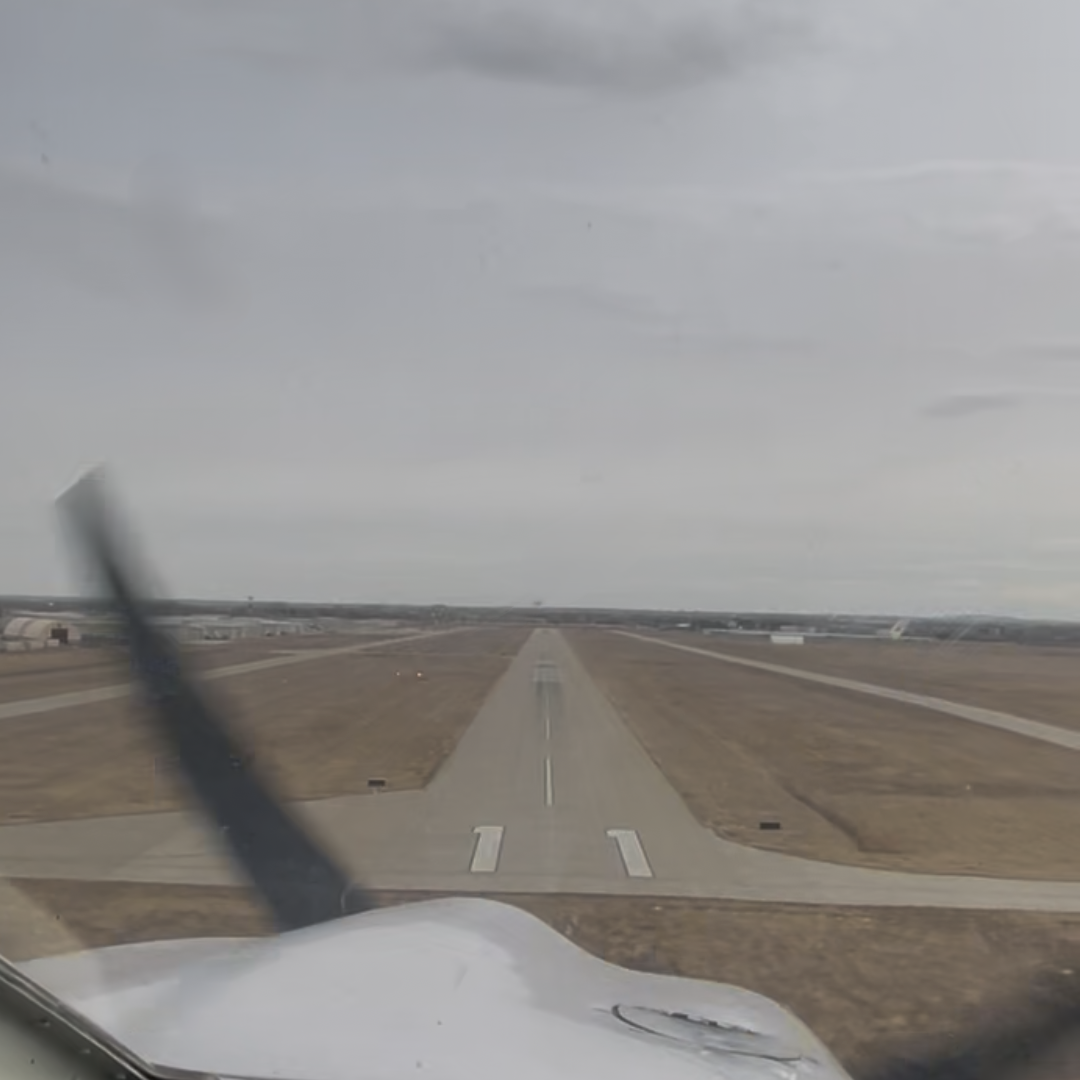
Our approach was fine. Downwind, abeam the numbers, Alex pulled the throttle back to our descent power setting, slowed the aircraft to a proper air speed, turned base, then started messing with the throttle. In and out the throttle went as we turned towards final. I observed the vertical speed indicator fluctuate between a 100-foot climb and a 500-foot descent as he approached the runway.
As we approached the threshold, I guarded the yoke with my right hand, as I usually do with new students, prepared to grab it in an instant while my left hand would cram the throttle full forward and go around.
As the nose of the airplane tilted up and down above the runway, I lightly grabbed the yoke to assist with the landing. We hit the runway and bounced, then reestablished the airplane to the centerline, and I said, “Flaps retract, full throttle.” We raced down the runway, and Alex lifted our plane off the ground like a pro. In my mind, I quickly understood what Austin tried to explain. Alex could not land an airplane to save his life.
As we turned crosswind, I looked towards Alex and asked, “Was that a typical landing?” Alex responded, “Yes. I do not get it. I cannot land an airplane.” I could see the look of frustration and disappointment on his face. We turned downwind, and he said, “I practice landings all the time on my simulator at home, and they work out just fine. But I cannot get it to work in the actual airplane.” I noticed an angry tone in his voice, not towards me but towards the situation and himself. I thought, perhaps Alex is not ready to learn. A student is not mentally ready to learn when they are frustrated.
“Alex, I’m going to demonstrate a landing, and I want you to just observe. Don’t touch the controls. Don’t try to memorize every movement. Just feel what I and the airplane are doing.” I took the controls and guided us through the approach. As we descended toward the runway, I narrated every movement and sensation I felt, along with everything I saw out the window, hoping he would comprehend just some of what I was doing and saying.
After landing and reconfiguring for takeoff, I said, “Your aircraft,” and we continued down the runway. Alex took the controls, and we lifted off the ground in another perfect rotation and climb out.
As we continued downwind, Alex explained, “I see what you did, and I do it that way on my simulator, and it works out fine. I’m aiming down the runway as if I were looking through a rifle scope, shooting towards the end of the runway.” “A rifle scope?” I responded. “We do not want to aim down the runway as if we were looking through a scope. If anything, it is like shooting a shotgun. You need to see the whole picture. On final, pick an aiming point and keep it steady in the windshield. Then, as you transition to the flare, lift your eyes farther down the runway. Use your peripheral vision to see the runway edges rise, feel the airplane settling, and keep the centerline pinned.” Alex nodded. “And stop using your simulator to practice landings. The site picture is nothing like what you are attempting to see in the real airplane.”
“Your turn,” I said. “But this time, I want you to forget everything you think you know about landing. We’re starting fresh. This is your first landing lesson. What we are about to learn will be the foundation of every landing you ever make.” I thought to myself about the principle of primacy.
Primacy: What is learned first leaves a strong, durable impression, so it must be taught the first time correctly. Relearning later is harder and can be confusing.
Alex had been teaching himself bad habits, and no one had held him accountable for his actions. We had to erase what he thought he knew and begin fresh. We needed to override those memory patterns with correct ones, and the best way to do that was to treat this as a completely new beginning.
As Alex turned from downwind to base, again, he fiddled with the throttle. In and out, he pushed and pulled the throttle lever. I said, “Leave the throttle alone, set the proper power setting, and let the airplane fly its path to final, then, if you need to add some power, add some. I tell you when you can touch the throttle.” As we approached short final, I told him he could use the throttle when he thought he needed it. Alex hit the runway hard, and we bounced again before landing. I thought to myself, if I were a cat, I would only have eight lives left. For the next hour, we continued to exercise and embrace slam-and-goes.
Exercise: Connections strengthen with practice and weaken when practice stops, and is most effective when tied to real-world application, not rote repetition.
“Practice makes perfect,” I told him. Sometimes Alex would dive to the runway, and other times we would float a third of the way down the runway before he or I would say, ‘going around.’ We spent the next few lessons repeating landings and other maneuvers. I do not recall how many touch-and-goes we completed before we finally saw improvements over previous landings.
Students can see when an instructor is hovering, ready to grab the controls, and it can subconsciously undermine their confidence in their own ability. I wanted to give him confidence that he could land without my hands, prepared to grab the yoke at the last second. We descended towards the runway. Nervously and wide-eyed, I kept my hands on my legs with my feet just above the rudder pedals and my mouth shut. We hit hard, slamming the aircraft onto the runway. One of the hardest landings I have allowed a student to make, but he landed it without a bounce, without a float. Alex retracked the flaps, added full power, and we rose off the ground. I saw in his face the joy of accomplishment. He landed the airplane without the assistance or nagging of an instructor. Though I could not help but laugh internally, thinking that he did not take all nine lives today. The effect of the good landing is what Alex needed to build confidence.
Effect: Outcomes drive repetition; satisfying results are repeated, while unpleasant results are avoided.
“Alex, to keep your landings in good shape, we should train your brain soon to preserve muscle memory. You need to practice it or risk forgetting. Can you fly tomorrow?” I asked.
Alex responded, “Yes, I would love to.”
The next morning, Alex and I returned to the sky and not just to land at one familiar airport. This time, I directed Alex to navigate our way to five other airports, then back to our home airport. Six different runways. Each approach gave Alex another opportunity to land the airplane. We were not just practicing landing; we were practicing to land in real-world situations. Alex was beginning to feel what it was like to enjoy piloting an airplane rather than just learning. It was now purposeful.
Each airport we visited had different dimensions. During one of our landing attempts, Alex reverted to his bad habits, pushing and pulling the throttle in and out as we descended. The site picture was different. This runway was much narrower than the others, 40 feet wide compared to the 100-foot-wide runway at our home airport. We approached a little fast, the main hit hard, followed by the nose. We bounced. The airplane went back up. Alex attempted to push the nose down. I grabbed the yoke, held it steady, said, “Going around,” and pushed the throttle forward.
Alex looked at me, shocked, and said, “I do not know what went wrong.” I responded, “That was a bounce likely to turn into a porpoise, and if not managed properly,” as we ascended from the runway. “Trying to correct that bounce usually worsens it, potentially causing a series of violent ups and downs, and if not immediately corrected, could lead to nose gear collapse or a prop strike.” I saw fear in Alex’s eyes. The intensity of this moment would stay with him forever.
Intensity: Vivid, realistic, meaningful experiences teach more than routine or boring ones.
As a CFI, I appreciate the moments when the student and I face an intense situation together during flight training, rather than when they are flying solo. If they were to experience an event like that without an experienced pilot next to them, they might not be able to correct the situation quickly enough. By going through the event together, they might have a better chance of recognizing it as it happens to them in the future.
Alex and I spent the next couple of weeks developing the mental picture and retraining his mental primacy to maneuver the airplane for a successful landing. We exercised his brain and muscles to see the correct sight picture, fly the proper approach, and complete good landings, which had a positive effect on his confidence. No more intense moments to be had while we trained, one was enough.
The recency of several perfect landings made me realize that it was time for Alex to solo. He did not know he would be soloing that day. I asked, “Are you ready to do this?” Alex asked, “Today?” I nodded, and he said, “Yes.” We completed the required endorsements in his logbook, and I hopped out of the airplane. I watched Alex take to the sky alone, making three trips around the pattern and landing each time smoothly.
Recency: The most recently learned items are remembered best and recall fades with time.
It was not long after that Alex earned his Private Pilot Certificate. When he did, he thanked me for taking the time to work with him, for managing his struggles, and for instilling the confidence that he could land an airplane and become a private pilot. He also handed me a bottle of Macallan 15, a special touch for a passionate flight instructor.
FOI Stories
Leave a Reply