Category: Wednesday Lift-off


  • RESILIENCE

    Remaining Steady Through Turbulence
    Resilience is a life skill you do not truly appreciate until life starts changing your plan. In Flight Plan for Success: Navigating Life: 26 Skills from A to Z, I talk about the skills that help you navigate adulthood.

    Resilience is not pretending everything is fine. It is staying steady when it is not. It is taking the next step when motivation runs dry. It is being adaptable enough to change the route without abandoning the destination.

    I have had my share of changes, including relationship, career, and financial shifts. Some I chose, and some showed up uninvited. Either way, the result is the same. You feel the hit. You feel the stress. You start doing the math in your head and wonder if it would be easier to quit, to retreat to something comfortable, familiar, and that does not require you to stretch. That is the moment resilience matters.

    Professionally, resilience is what separates people who grow from those who stall. Jobs change, markets shift, plans fall apart, and criticism comes with the territory. I have been told “you cannot do it” more times than I can count. Resilience is refusing to let someone else’s doubt write your story. It is learning, adjusting, and continuing forward anyway.

    Personally, resilience is about protecting your future. It keeps one rough season from becoming your identity. It turns setbacks into lessons and pressure into progress. More than anything, it keeps you honest with yourself.

    Life will come with moderate-to-severe turbulence. Having the resilience to adjust is what keeps you in the air, allowing you to maintain your heading and letting you finish the flight with zero regrets.

    Want more insights on navigating life skills? Grab Flight Plan for Success.

  • QUESTION

    Guided by critical thinking

    Questioning, guided by curiosity and critical thinking, is one of the most underrated life skills. In Flight Plan for Success: Navigating Life: 26 Skills from A to Z, I discuss making intentional choices rather than drifting through life. Questioning is one way to help you avoid drifting through life. Being curious and asking questions can protect you from confusion, manipulation, and regret, especially when the source seems confident or claims to be an authority. Beware of anyone who discourages your questions or rushes you into making decisions. That could be a signal that they do not want you to see the whole picture.

    Curiosity is a skill that helps you learn, grow, and avoid costly mistakes. I would have liked to have asked an aviation mentor more questions about the expectations of flight training for someone changing careers in their forties. Unfortunately, we often do not know what questions to ask.

    Apply critical thinking and common sense to what you hear, see, and read, whether it is coming from a boss, a friend, social media, or the so-called expert selling you the next big thing. As President Ronald Reagan said, “Trust, but verify.”

    In a personal setting, people often want you to ask questions because it shows you care. When someone does open up to you regarding your questions, do not just hear their answers; truly listen to what they have to say. You asked the question; learn from it. The right questions deepen relationships, reveal needs, and can build trust. In professional life, asking thoughtful questions leads to better teamwork, clearer expectations, and fewer expensive do-overs. Do not think asking questions is a sign of defiance.

    Questioning is not about arguing with everything you are told. It is about asking better questions, challenging assumptions, and refusing to accept things at face value when something does not feel right. When you practice questioning others and listening, you gain a clearer sense of who you are associating with. Questioning yourself will give you better direction so you can live a life with zero regrets.

    Want more insights on navigating life skills? Grab Flight Plan for Success.
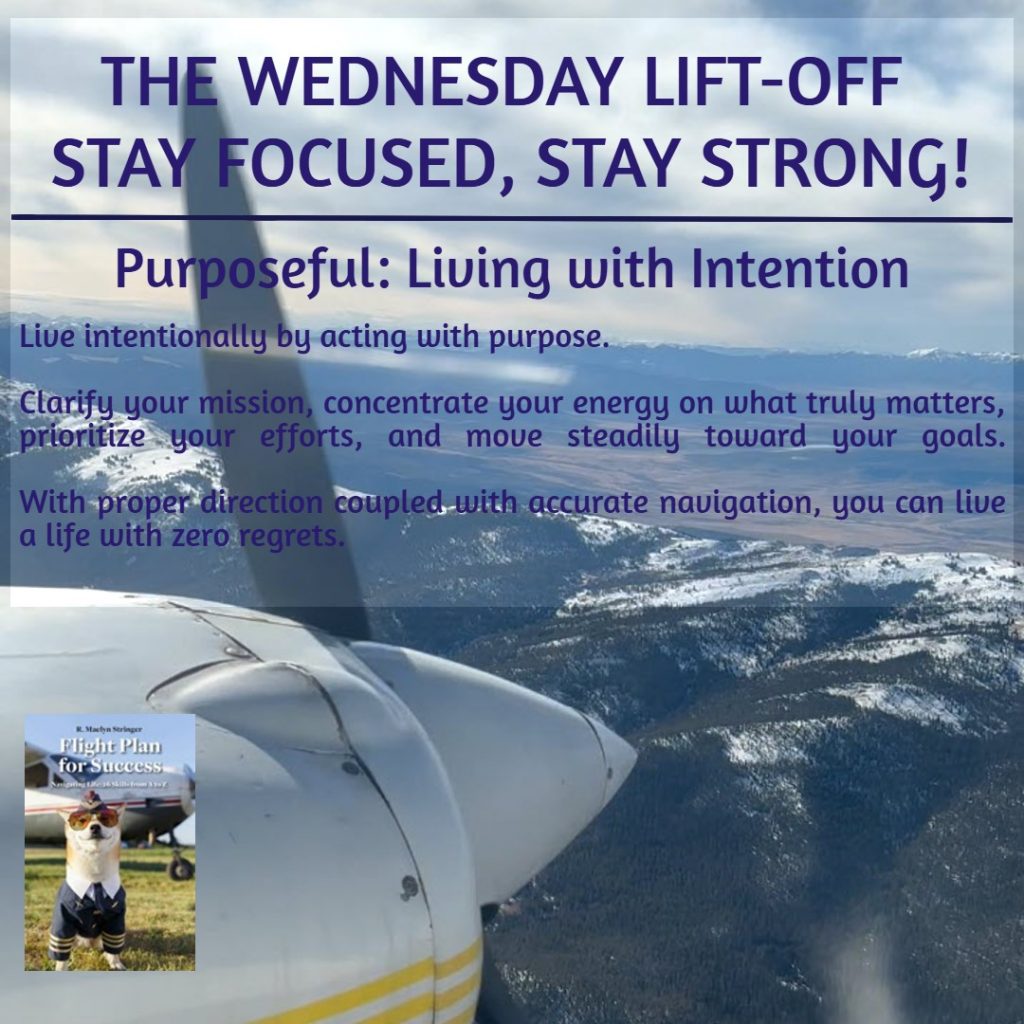
  • PURPOSE

    Living with Intention

    Living your life with a purpose gives you a mission. Having a purpose provides direction, helping you focus on what truly matters so that your daily actions are intentional and meaningful. Purpose is the motivation behind every aspect of life.

    As highlighted in my book ‘Flight Plan for Success: Navigating Life: 26 Skills from A to Z,’ purpose is more than just a desire; it’s a conscious commitment to meaningful action, especially when driven by ambition, goals, self-discipline, and integrity. Understanding why you are working toward a goal, clarifying your decisions, and sharpening your focus help you stay organized, prioritize what matters most, and persist through setbacks.

    In personal life, having purpose enhances relationships, health, and mental clarity. Professionally, it boosts motivation and performance, while also fostering trust with others through dependable service and quality. A life driven by purpose helps prevent aimlessness, making sure your time, talents, and opportunities are utilized effectively.

    I started living purposefully when I decided to change my career to become a pilot. Before that, I lacked clarity about my life’s direction, trying out careers like insurance, telecommunications, information systems, financial advising, and general contracting, yet feeling unfulfilled and without purpose. Now, I am committed to becoming the best pilot I can be. As an instructor, I put in extra effort to ensure my students become safe pilots and advocate for opportunities in aviation to young adults. Although I found my purpose later than I hoped, I feel satisfied and purposeful today.

    With purpose as your guide, you can navigate toward success and personal growth. I advocate living with zero regrets, which can be difficult when in the back of your mind you think to yourself, ‘I should’ve done this, or I should’ve done that’. I encourage you to discover your purpose early in life so you can enjoy a long, fulfilling journey without regrets.

    Want more insights on navigating life skills? Grab Flight Plan for Success.
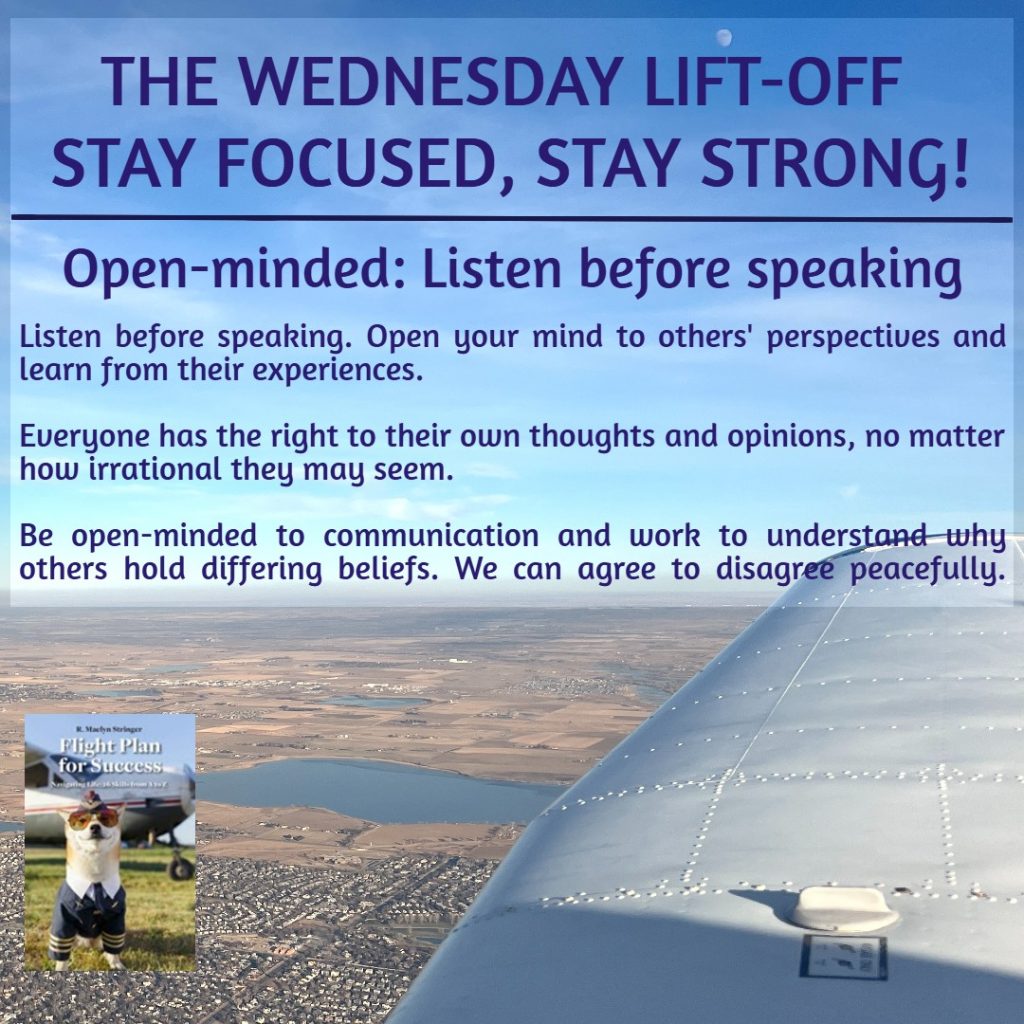
  • OPEN-MINDED

    Listen Before Speaking

    As I have grown older, I’ve learned to stay open-minded, which has become one of my most valuable habits. It has influenced many of my decisions and contributed to my professional growth. Being open-minded doesn’t mean abandoning my values; it means being humble enough to recognize that I don’t know everything and don’t have all the answers. There’s always something to learn from others.

    Being open-minded isn’t always easy. As a young adult, I often believed it was my way or the highway. Looking back, I might have missed out on personal connections and business opportunities because of this attitude. Luckily, everything changed when my son was born 17 years ago. That event sparked a shift in my mindset, helping me become less selfish and more receptive to others’ perspectives, enabling me to listen better.

    There have been many times when I thought I was right, only to realize later that I was wrong because I lacked key information. These experiences remind me that open-mindedness is not a trait to master once; it’s a discipline that must be practiced every day. It requires humility to consider another viewpoint and courage to admit when someone else has a better idea.

    People have the right to think and speak as they wish, regardless of how wrong or ignorant we may believe them to be. We come from different backgrounds and experience life in various ways, so no two perspectives are the same. When I take the time to see life through someone else’s eyes, I become more understanding, patient, and compassionate.

    Staying open-minded has helped me grow, succeed, and live with purpose, and it remains one of my strongest tools for living with zero regrets.

    Want more insights on navigating life skills? Grab a copy of “Flight Plan for Success: Navigating Life: 26 Skills from A to Z”

  • NOBLE

    Live Honorably

    HONORABLE IN CHARACTER AND PURPOSE

    As a young cadet then officer in the Air Force, I learn that being noble isn’t just a saying; it’s a way of life one actively chooses. It cannot be forced upon you.

    As I have grown older and strive to live honorably, I have sadly seen many people hurt others to achieve their goals and attain success by exploiting others. It is discouraging to witness these individuals succeed, especially knowing how they accomplished their achievements.

    Though only in high school, I have observed my son live with dignity. I have seen how coaches sometimes let team players participate in a sport where some students regularly display poor character, while my son supports from the sidelines. He does not complain to the coaches. He keeps his spirits high, continuing to lift the spirits of others on the team. He does not whine, but I notice it.

    Success means more than just advancement; it’s about lifting others along the way. Be ambitious, yes, but never at the expense of others. A noble life is one where you reach your destination with your honor and integrity intact and the respect of those around you.

    Stay strong, live nobly, be happy with who you are, and live a life with zero regrets.

    Want more insights on navigating life skills? Grab a copy of “Flight Plan for Success: Navigating Life: 26 Skills from A to Z”

  • MOMENTUM

    Keep Moving, Keep Growing

    Momentum is the subtle force propelling your life onward. As a young adult fresh out of college, I was driven, passionate about solving problems, and determined to make an impact. But then life intervened. I fell into a comfortable routine, married, had a child, and started my own business. Comfort became my usual state, causing my progress toward goals to slow down. Over time, this stillness diminished my sense of purpose.

    Finding momentum again has been the most challenging and rewarding chapter of my life. In my forties, I rediscovered my passion for aviation and committed to a new path as a professional pilot. Is it hard? Absolutely. The training is intense, the schedule as a flight instructor is demanding, and the financial strain is real. I have spent a fortune and lived on wages that would make most people step back, examine closely, and quit. Yet I keep moving because purpose is worth the cost, and forward motion is the only way to live a dream.

    Momentum grows from small wins. It doesn’t require extensive personal development. It does require consistent action. Keep moving forward, step by step, prioritizing steady effort over waiting for perfect conditions. I’ve learned that perfection is often a mirage on the horizon that interferes with attaining your objective. Stay engaged in the journey by continuously learning through books that broaden your perspective, mentors who sharpen your skills, and honest self-reflection that reveals the next right step.

    There will be setbacks. When you stumble, pause to breathe and think, reset your plan, and move forward with purpose. Treat mistakes as the cost of tuition, not as failures or judgments on your potential. Learning from your mistakes will make you wise. The lessons learned become fuel for the next phase of the climb. Build simple habits you can repeat during tough times, like making your bed every day. Protect your focus by removing distractions that drain your energy. Distance yourself from negative influences. Track what really matters: your daily routine, hours invested, and minor improvements, and let these markers motivate you to keep going.

    Momentum is quiet, patient, and accumulates over time. Celebrate progress. Completing a book chapter, finishing a workout, and learning a new skill are the foundational steps. It often seems unimpressive at first, but suddenly, months later, you find yourself in a new place with new abilities.

    If you feel stuck, start with one small action today. Send that email, study that lesson, walk that mile. The sooner you move, the sooner motivation catches up, and the easier the next step becomes.

    I will not give up, and neither should you. Follow your dream, stay motivated, and keep moving forward with momentum —not because every choice is perfect, but because you keep choosing the next step. Take it today, then retake it tomorrow, and let momentum carry you to where your purpose awaits so that you can live a life with zero regrets.

    Want more insights on navigating life skills? Grab Flight Plan for Success.
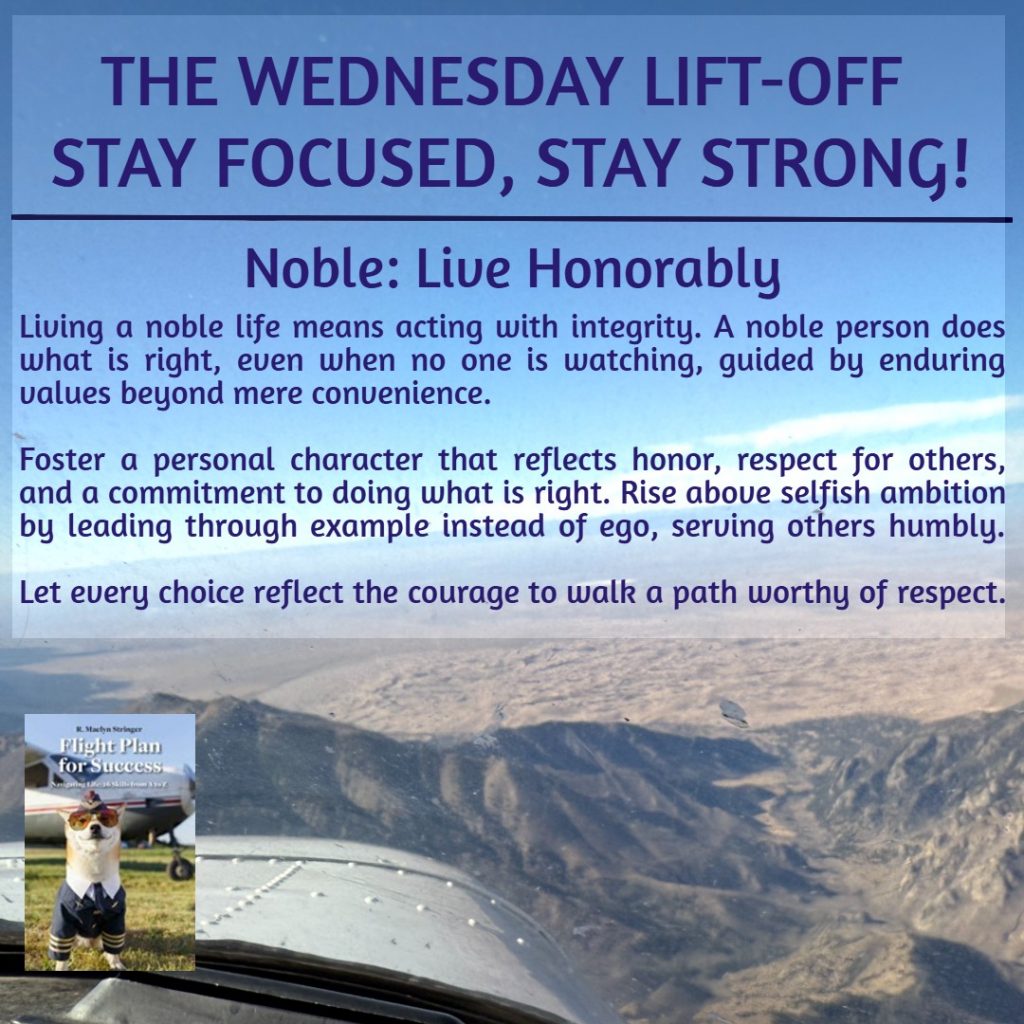
  • Clear Skies or Fogged Thinking?

    Flying Clear: Avoiding the Fog of Drugs and Alcohol

    In writing “Flight Plan for Success: Navigating Life: 26 Skills from A to Z”, I highlighted the critical dangers of drugs and alcohol.

    As a pilot, I understand the perils of flying into fog without proper preparation. Disorientation can easily set in, leading us to lose our sense of direction. Drugs and alcohol cloud our judgment and distort our perception, hiding the clear path ahead.

    In my younger days, I viewed drinking as merely part of the fun. Now, I reflect on the words and actions that caused embarrassment and hurt. At that time, I laughed them off. The risks of drugs are even greater. A single pill at a party could be laced with fentanyl, leading to fatal consequences. Addiction can consume your income, time, and future.

    Alcohol demands respect. Even one drink can impair judgment, especially in young adults whose brains are still developing. Consuming alcohol can cause learning difficulties, long-term health problems, and poor decisions with lasting effects. Whether it’s a DUI, a broken relationship, or a missed opportunity, the true costs far surpass immediate pleasures.

    Living a life filled with success, clarity, and sound judgment is essential. Just as a pilot checks the weather before taking off into the skies, we must evaluate our choices before facing life’s challenges. Drugs and alcohol create turbulence and cloud the horizon.

    My encouragement is simple: don’t let substances rob you of your potential. Choose clear skies over fogged thinking, and you’ll discover just how far you can go.

    Want more insights on navigating life skills? Grab Flight Plan for Success.
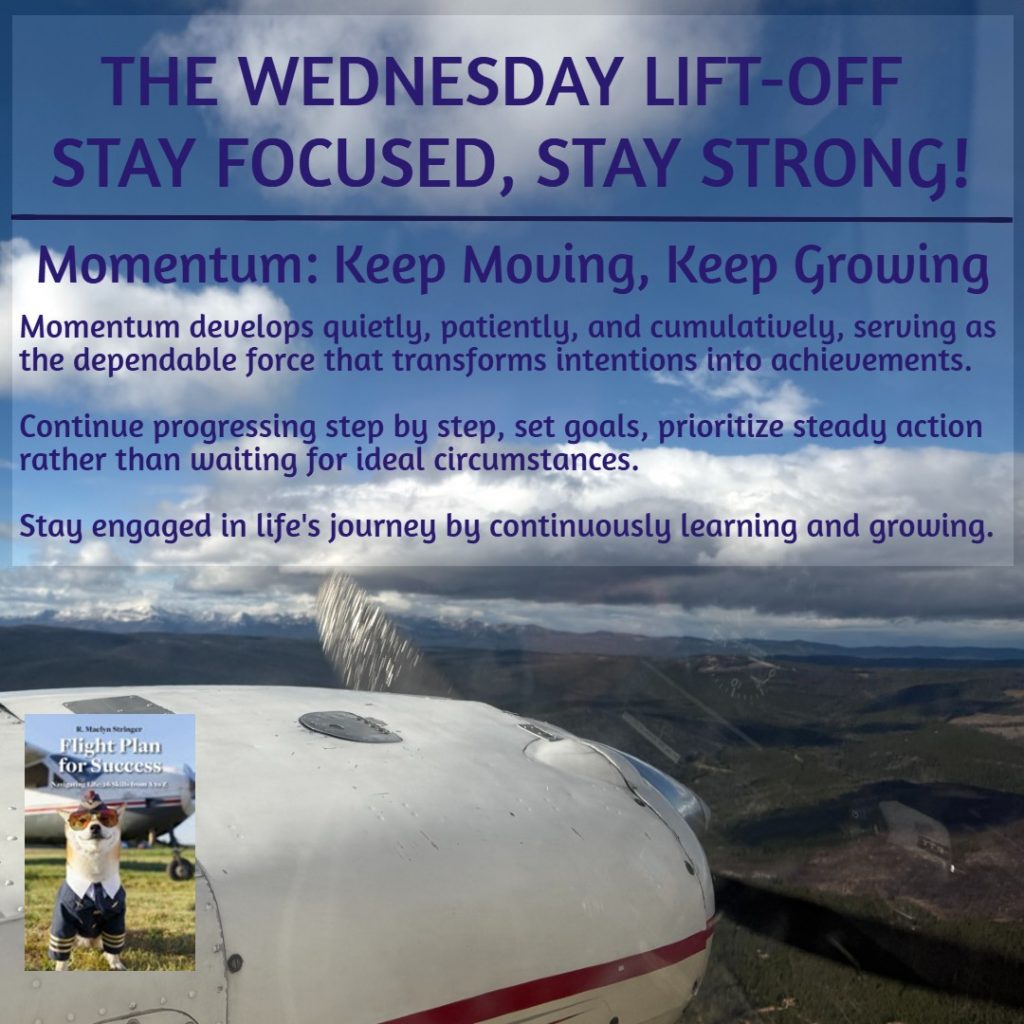
  • The Power to Learn

    I’m excited to share another excerpt from “Flight Plan for Success: Navigating Life – 26 Skills from A to Z.” This time, I’m reflecting on the importance of communication and how my approach has changed with age and experience. In this excerpt, I discuss learning to listen, thinking before speaking, and a piece of wisdom my father once shared that still resonates with me today.

    As I’ve gotten older, one of the most important lessons I’ve learned is the value of effective communication, not just knowing how to speak, but also having the wisdom to know when to stay silent. When I was young, my words were often sharper. I would speak before thinking about how my words might be received, driven by impulse or the need to prove a point. I believed that being right was more important than being kind or understanding. I thought that truth, when spoken plainly, was enough, even if it hurt someone in the process.

    My father once told me, “You don’t have to be so honest with people all the time.” At the time, I brushed it off. I thought honesty was a virtue to be practiced openly, regardless of the situation. But over the years, I’ve come to understand what he meant. Honesty without tact or empathy can do more harm than good. There’s a difference between being truthful and being hurtful.

    Life has a way of humbling you. Relationships, whether personal or professional, have taught me that words carry weight. They can heal or hurt, lift someone up or tear them down. I’ve learned to pause and ask myself whether what I’m about to say is necessary, helpful, or kind. That moment of pause has often saved me from regret. Silence is no longer something I fear; it’s a tool I value.

    I’ve also come to realize the power of listening. Not just hearing but truly listening. It involves being present, patient, and open to others’ thoughts and feelings. This type of listening fosters trust, respect, and stronger bonds.

    In “Flight Plan for Success”, I encourage young adults to communicate intentionally and with empathy because I’ve experienced the consequences of being too blunt, as well as the rewards of choosing my words carefully. My journey has shown me that effective communication isn’t just about expressing yourself; it’s about understanding others.

    I’m still learning, but one thing has become clear: words can’t be taken back. Speak clearly, listen with compassion, and remember that sometimes, the kindest thing you can say is nothing at all.

    This book makes an excellent gift for any young adult about to graduate, offering timeless guidance as they prepare to chart their life’s course.

    Want more insights on navigating life skills? Grab Flight Plan for Success.

  • BUDGET

    Time and Money: Lessons Learned on the Journey to Flight

    Looking back, I wish I had understood the importance of managing both time and money much earlier in life. For years, I drifted through different careers, each offering something but none fulfilling me the way aviation does. I spent a lot of time searching for my true calling. Even though it wasn’t all wasted, I gained skills and life experience, but it definitely wasn’t planned. I hadn’t managed my time wisely, and by the time I realized what I truly loved, decades had passed.

    Discovering my passion for aviation in my late forties was both exciting and intimidating. Now I had to plan carefully. I needed to reallocate my time, eliminate unnecessary distractions, and study again as if I were twenty. It has been much harder than I expected. But more importantly, I had to manage my finances. Changing careers at that age isn’t easy. I couldn’t depend on student loans or youthful flexibility. Instead, I relied on the savings I had accumulated and made tough financial choices. I cut back on luxuries, delayed immediate gratification, and lived modestly so I could afford flight training and certifications.

    It taught me that budgeting isn’t about restriction; it’s about alignment. When your time and money support your passion, they become tools of empowerment, not limits. I had to live on part-time income and practice strong self-discipline, but I gained something far more valuable: the chance to wake up excited about what I do.

    If there’s one thing I’ve learned, it’s this: budget early. Save money as if your dreams depend on it because they might someday. And protect your time, because once it’s gone, you never get it back. Budgeting time and money wisely gave me the runway to follow my passion. And now, I finally get to fly.

    Want more insights on navigating life skills? Grab Flight Plan for Success here.

    This book makes an excellent gift for any young adult about to graduate, offering timeless guidance as they prepare to chart their life’s course.

  • AMBITION

    The Driving Force

    Fueling the Journey Back to My True Passion

    From a young age, I was told that if I put my mind to something, I could achieve it. And so, with a head full of dreams and a heart full of ambition, I set my sights on becoming an Air Force pilot. I studied hard, earned a degree, and received my commission. But life, as it often does, had other plans. The Soviet Union fell, and the demand for Air Force pilots dropped, leaving me on an unexpected flight plan. My ambition stayed the same, but my direction changed.

    Ambition is the fuel that propels us forward, even when our plans get diverted. After leaving the Air Force, I chased success in business, started several companies, and earned a master’s degree. I wore many hats, including those of database administrator, financial advisor, realtor, and general contractor. I followed opportunity wherever it appeared. But something was always missing.

    The ambition I once had for aviation never died; it was simply suppressed by life’s demands, relationships, and the struggle to maintain financial security. I made several personal and career mistakes. I married too young. I listened to others’ opinions more than my own. And for a long time, I chased the dreams of someone I wasn’t meant to be. But ambition has a funny way of whispering louder with age. And when I finally listened, I realized the truth: I never wanted to give up flying; I just hadn’t realized it yet.

    In my late forties, I took a bold step. I reduced my income, lived frugally on savings, and restarted flight training. It has taken years, more than I expected, and hundreds of hours of flying to become a certified flight instructor, where I continue to work, learn, and accumulate more flight hours in hopes of flying the big aluminum. It has not been easy, but when ambition is paired with self-discipline and persistence, the unlikely becomes possible.

    Writing “Flight Plan for Success” was born from that same drive. I wanted to share the lessons I’ve learned, both the good and the hard-earned, with young people on the brink of adulthood. My goal now is to help others find their way and remind them that diversions don’t mean failure; they’re just part of the story.

    Ambition never truly leaves us. It is in us, waiting patiently, like a co-pilot, ready to assist when we’re prepared to soar again. I am living proof, and I’m just getting started.

    Want more insights on navigating life skills? Grab a copy of “Flight Plan for Success: Navigating Life: 26 Skills from A to Z”